
Med Spa Website Design: What Converts Visitors Into Bookings
By Rome Thorndike
What Med Spa Visitors Want
Med spa visitors are evaluating two things: "Can this place deliver the result I want?" and "Do I trust them to do it safely?" Every design decision should answer one of these questions.
The typical journey: visitor finds your site through search or social, looks at before/after photos, reads about the specific treatment, checks credentials and reviews, then books a consultation. Your website needs to support this flow without friction.
The biggest conversion killer for med spa sites: poor mobile experience. Over 70% of med spa traffic is mobile. If your booking flow requires pinching, zooming, or excessive scrolling on a phone, you lose the majority of potential bookings.
Design Elements That Convert
Before/after galleries. The single most important conversion element. Visitors need to see real results on real patients. Organize by treatment type. Include treatment details and number of sessions. Get proper consent for all patient photos.
Treatment pages with specifics. Each service needs its own page: what the treatment does, who it is for, what to expect, downtime, pricing range, and a booking CTA. Generic service lists do not convert. Specifics build confidence.
Provider credentials prominently displayed. Medical director's credentials, staff certifications, years of experience, and professional affiliations. Med spa visitors are trusting you with their appearance. Credentials reduce anxiety.
Reviews and testimonials. Google reviews embedded on the site. Video testimonials are even better. Place them on service pages near the booking CTA: social proof at the point of decision.
One-tap booking. Mobile visitors should be able to book in one tap from any page. Sticky "Book Now" button that follows the scroll. Link to your booking system (Jane, Vagaro, or direct form) without friction.
SEO for Med Spas
Med spa SEO targets "[treatment] + [city]" searches: "Botox Austin," "laser hair removal Denver," "microneedling near me."
Create a dedicated page for each treatment you offer, optimized for "[treatment] in [city]." Include schema markup (LocalBusiness, Service) on every page. Build your Google Business Profile with treatment categories, photos, and active review management.
The hub-and-spoke model works well: a hub page on "Med Spa Treatments" linking to individual treatment pages. Each treatment page links back to the hub and cross-links to related treatments.
Pricing Transparency and Conversion
Med spa visitors who cannot find pricing leave. The data is consistent: sites that display treatment pricing (even ranges) convert at higher rates than sites that hide pricing behind a "contact us" wall.
You do not need exact prices. Effective formats:
- Per-unit pricing: "Botox: $12-14/unit" gives enough information for informed visitors to self-qualify.
- Starting-at pricing: "Microneedling: starting at $300/session" sets expectations without locking you into fixed rates.
- Package pricing: "3 sessions for $750 (save $150)" encourages commitment and increases average booking value.
- Membership models: "VIP members save 15% on all treatments" creates recurring revenue and loyalty.
Displaying pricing filters out low-intent visitors and attracts high-intent ones. A visitor who sees "$14/unit for Botox" and still books a consultation is pre-qualified. Your consultation close rate goes up because the price conversation already happened.
Mobile-First Design for Med Spas
With 70%+ of traffic on mobile, your med spa site must be designed for phones first, then adapted for desktop. Key mobile requirements:
Tap targets. Buttons need to be at least 44x44 pixels. "Book Now" buttons should be large, high-contrast, and reachable by thumb. Place CTAs in the bottom third of the screen where thumbs naturally rest.
Image loading. Before/after galleries are image-heavy. Use WebP format, lazy loading, and responsive srcset to avoid gallery pages that take 5+ seconds to load on mobile. A slow gallery kills the browsing experience. Target 90+ on PageSpeed Insights mobile, even on image-heavy pages.
Form simplicity. Mobile booking forms should have 4-5 fields maximum: name, phone, email, treatment interest, preferred date. Every additional field drops mobile form completion rates by 5-10%. Use dropdowns instead of text inputs where possible.
For more on performance optimization, see our guide on reaching a 90+ PageSpeed score.
Build Your Med Spa Site
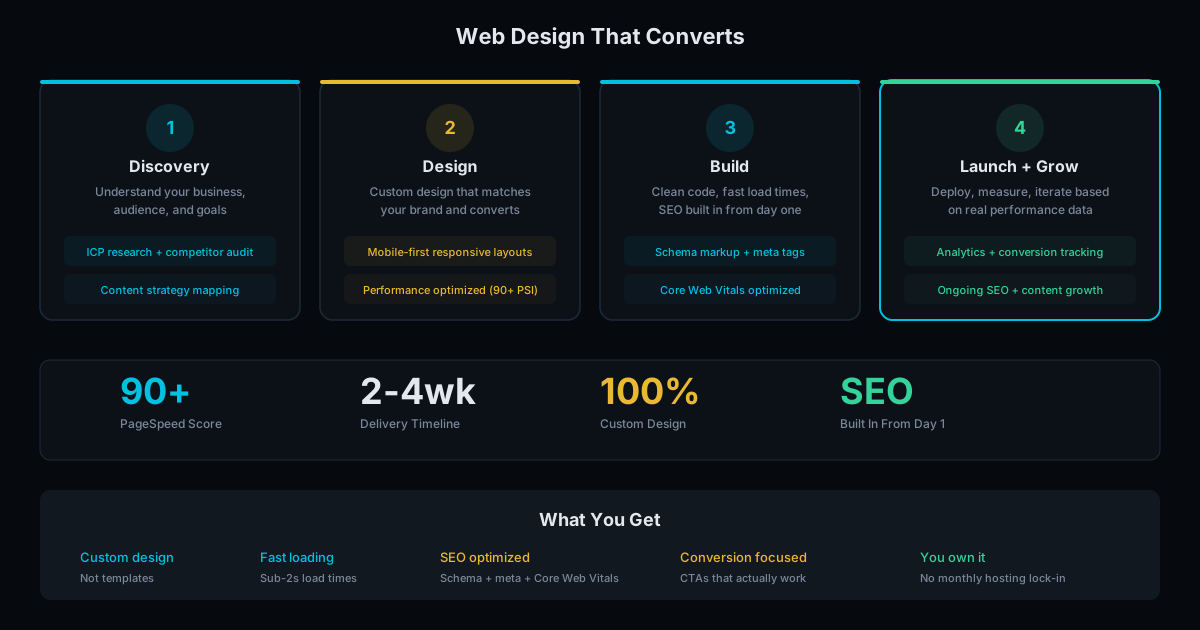
We design websites for med spas that load fast (90+ PageSpeed), rank in local search, and convert visitors into booked consultations. Every build includes mobile-first design, before/after gallery templates, treatment pages, and full SEO markup.
Med spa sites start at $3,000. View our pricing for med spa website packages. Contact us for a custom quote or audit your current site to see what is costing you bookings.
Frequently Asked Questions
What is the most important page on a med spa website?
The individual treatment pages. Each treatment page is a landing page for a specific search query ('Botox [city]'). It needs before/after photos, treatment details, pricing, and a booking CTA. The homepage gets traffic, but treatment pages convert it.
Should I show prices on my med spa website?
Yes, at minimum show ranges. Visitors who cannot find pricing leave. You do not need exact prices: 'Botox: $12-14/unit' or 'Starting at $300/session' gives enough information to qualify leads without locking you into fixed pricing.
How do I get more Google reviews for my med spa?
Ask every patient at checkout. Send a follow-up text or email 24 hours after their appointment with a direct link to your Google review page. Make the process one tap. Consistency matters more than volume: aim for 2-4 new reviews per month.
Ready to Fill Your Next Event?
We build the page, set up the pixels, and run the ads. You run the event.