
Hub-and-Spoke SEO: Build Topical Authority
By Rome Thorndike
What Hub-and-Spoke Means
Hub-and-spoke is a content architecture where one central page (the hub) covers a broad topic and links to multiple detailed pages (spokes) that cover subtopics. Every spoke links back to the hub and to related spokes.
Example: A hub page on "Website Design" links to spokes on "Static vs WordPress," "PageSpeed Optimization," "Schema Markup," and "Pre-Launch Checklist." Each spoke links back to the hub and cross-links to related spokes.
This structure tells Google three things: you cover the topic comprehensively, your content is well-organized, and pages are contextually related. A site with 30 pages in a hub-and-spoke structure outranks a site with 30 disconnected pages on the same topics.
Why It Builds Topical Authority
Google evaluates topical authority at the domain level. A site that covers every aspect of a topic signals expertise. A site with one article on the topic signals surface-level knowledge.
Hub-and-spoke amplifies this signal through internal linking. When your hub page links to 10 spoke pages and each spoke links back, Google follows those links and discovers a dense network of related content. The hub page accumulates link equity from every spoke. The spokes benefit from the hub's authority.
The result: the hub page ranks for broad, competitive terms. The spoke pages rank for specific, long-tail terms. Together, they capture search traffic across the entire topic.
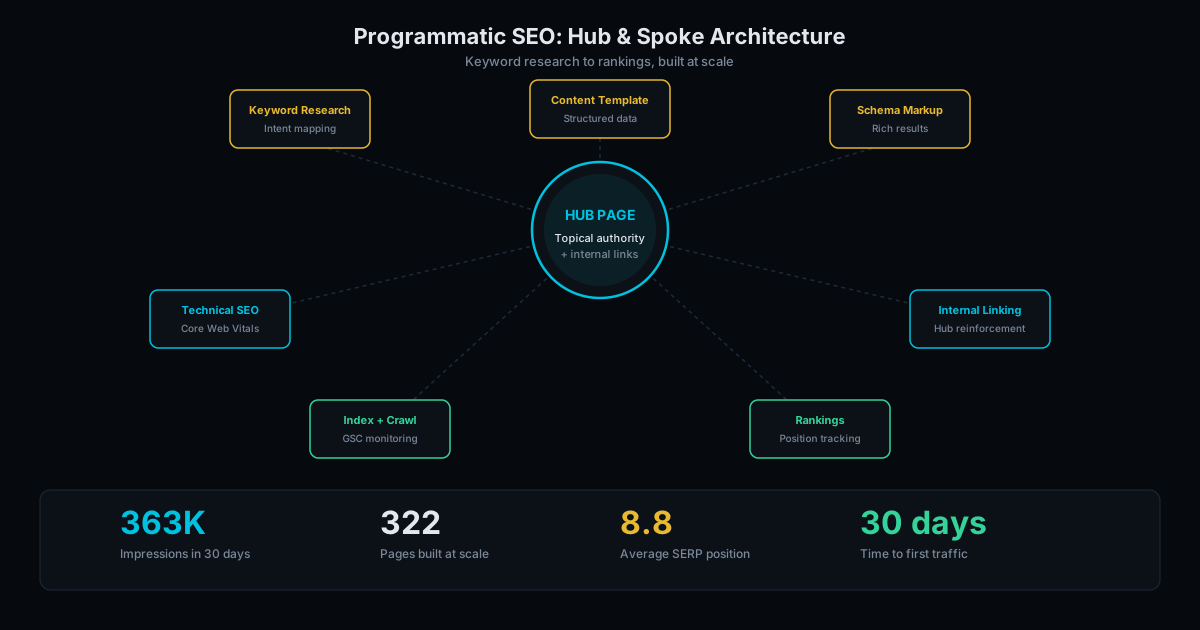
We used this architecture to generate 363K impressions in 30 days for a client. The hub pages ranked for broad terms. The 322 spoke pages ranked for specific entity names and comparison queries.
The Link Equity Math
Internal links distribute authority (PageRank) across your site. Without hub-and-spoke, authority flows randomly based on whatever linking pattern exists. With hub-and-spoke, authority flows intentionally.
Consider a site with 20 pages and no clear structure. Each page might link to 3-4 other pages, creating a flat, scattered link graph. Google crawls these pages but sees no topical hierarchy. Each page competes independently.
Now structure those 20 pages into two hub-and-spoke clusters of 10 pages each. Each hub links to its 9 spokes. Each spoke links back to the hub and to 2-3 sibling spokes. The link graph now shows two dense clusters with clear topical centers.
Google's algorithms interpret this density as a signal of depth and expertise. The hub pages receive 9 internal links each (one from every spoke), concentrating authority on the pages targeting the most competitive keywords. According to Google's SEO starter guide, internal linking helps Google understand which pages are most important on your site.
A flat site with 20 pages has no clear authority center. A hub-and-spoke site with 20 pages has two authority centers, each reinforced by 9 supporting pages. The second structure wins in competitive search, every time.
How to Build One
Step 1: Choose your hub topic. Pick a topic you want to own in search. It should be broad enough to support 5 to 20 spokes but specific enough that you can cover it comprehensively. "SEO" is too broad. "SEO for Service Businesses" is right.
Step 2: Map your spokes. List every subtopic, question, comparison, and use case within your hub topic. Each one becomes a spoke page. Use keyword research to validate search volume for each spoke.
Step 3: Build internal links. Every spoke links to the hub (in the intro or CTA). Every spoke links to 2-3 related spokes. The hub links to every spoke. This creates the dense linking structure that signals topical authority.
Step 4: Publish and expand. Start with the hub and 5 spokes. Add spokes over time. Each new spoke strengthens the entire cluster by adding another node to the link network.
Real-World Hub-and-Spoke Examples
Here is what hub-and-spoke looks like in practice for different business types:
Service business (plumber): Hub page: "Plumbing Services in Austin." Spokes: "Emergency Plumbing Austin," "Water Heater Installation Austin," "Drain Cleaning Austin," "Slab Leak Repair Austin," and 8 more service-specific pages. Each spoke targets a service + location keyword. The hub targets the broad "plumber Austin" query.
SaaS company: Hub page: "Email Marketing Platform." Spokes: "Email Marketing for E-commerce," "Email Automation Workflows," "Email Deliverability Guide," "Email Marketing vs Social Media," and comparison pages against competitors. Each spoke targets a use case or comparison keyword.
Professional firm (law): Hub page: "Personal Injury Lawyer [City]." Spokes: "Car Accident Lawyer [City]," "Slip and Fall Attorney [City]," "Workers Compensation Claims," "How to File a Personal Injury Claim," and FAQ pages for common questions. The hub captures broad intent while spokes capture case-specific searches.
The pattern is the same across industries: one comprehensive hub targeting a competitive keyword, surrounded by 8-15 spokes targeting long-tail variations. Check our local SEO checklist for how this applies to location-based businesses.
Apply It to Your Site
Hub-and-spoke works for any business with multiple service areas, locations, or use cases. Service businesses build hubs around each service. SaaS companies build hubs around each feature or use case. Professional firms build hubs around practice areas.
We implement hub-and-spoke architecture as part of our SEO and content strategy service. This includes keyword research, content mapping, internal link architecture, and either content creation or programmatic page generation for spoke pages.
SEO strategy starts at $1,500/month. Programmatic buildouts for spoke pages start at $3,000. See our pricing page for full details or book a call to discuss your topic map.
Frequently Asked Questions
How many spoke pages do I need?
Minimum 5 to create a meaningful cluster. The sweet spot is 10 to 20 spokes per hub. Beyond 20, consider splitting into sub-hubs. For programmatic SEO, spoke counts of 100+ work when each spoke has unique data.
Can I retrofit hub-and-spoke to an existing site?
Yes. Identify your existing content that covers related topics. Designate or create a hub page. Add internal links between the hub and existing content. Fill gaps with new spoke pages. The architecture improves existing content's performance.
How long until hub-and-spoke affects rankings?
Google needs to crawl and process the internal links. Typically 4 to 8 weeks after publishing and linking the cluster. Results compound as you add more spokes, and each new page strengthens the entire cluster.
Ready to Fill Your Next Event?
We build the page, set up the pixels, and run the ads. You run the event.