
Professional Services Website Examples That Convert
By Rome Thorndike
What Professional Services Visitors Need
Consulting firms, accounting firms, advisory businesses, and other professional services share a conversion challenge: the visitor needs to trust your expertise before they will share their business problems with you.
The conversion is not a purchase. It is a consultation request. The website's job is to build enough credibility that the visitor feels confident reaching out. Each element on the site either builds or erodes that confidence.
Three questions visitors answer before converting: "Do they understand my industry?" "Do they have the credentials I expect?" "Will they be easy to work with?" If the site answers all three within 30 seconds, conversion rates jump. If it leaves any unanswered, the visitor bounces to the next firm on their list.
Professional services sites have a longer consideration cycle than e-commerce. The average B2B buyer visits a website 3-5 times before filling out a contact form. Your site needs to reward repeat visits with deeper content on each return, not just repeat the same homepage message.
Elements That Build Trust
Client logos. Recognizable company logos above the fold signal that credible organizations trust you. Even 4-6 logos can lift conversion rates by 20-35%. Get permission to display them. Place them on the homepage, service pages, and the contact page.
Case study pages. Detailed examples of work you have done, with measurable results. "Helped [Client Type] reduce [metric] by [percentage] in [timeframe]." Specific results beat vague descriptions. Deloitte publishes over 200 case studies on their site, each targeting a different buyer persona and industry.
Team pages with depth. Beyond name and title, include each person's background, expertise areas, and professional philosophy. Professional services are people businesses. Visitors want to know who they will work with. Firms with detailed team bios see 40% more contact form submissions than those with name-and-title-only listings.
Industry-specific content. Blog posts, guides, or resources that demonstrate understanding of the visitor's industry. A consulting firm with 10 articles about healthcare consulting signals healthcare expertise more than a homepage bullet point ever could.
Clear service definitions. Describe what you do in concrete terms. "We help mid-market SaaS companies build sales processes that scale from $5M to $50M ARR" converts better than "Strategic consulting for growth-stage companies." Specificity filters out bad-fit prospects and attracts the right ones.
The Conversion Flow
Professional services conversion flows are longer than product purchases. The visitor may return 3-5 times before requesting a consultation. Your site needs to support this multi-visit journey:
- First visit: Establish credibility (logos, team, case studies). Give them a reason to remember you.
- Return visits: Deeper content (blog posts, industry pages, detailed service descriptions). Each visit builds familiarity.
- Conversion visit: Easy-to-find contact form or "Book a Call" button on every page. Calendly or similar for self-service scheduling eliminates the friction of back-and-forth emails.
A lead magnet (assessment, audit, calculator) captures email addresses from visitors who are not ready to talk but want to stay connected. Follow up with valuable content until they are ready.
Track conversion rates by page type. Homepage: 1-2% for consultation requests. Service pages: 3-5%. Case study pages: 2-4%. If any page type falls below these benchmarks, the page content or CTA placement needs attention.
Design Patterns That Work
Professional services sites that convert well share common design patterns. These are not trends; they are tested structures backed by years of B2B conversion data.
Sticky navigation with CTA. A "Book a Consultation" button fixed in the top nav means the visitor never has to scroll to find the next step. McKinsey, BCG, and Accenture all use this pattern. It works for firms of any size.
Service pages as landing pages. Each service you offer should have its own page optimized for that audience. A tax advisory page speaks to CFOs. A litigation support page speaks to general counsel. Different audiences, different language, different proof points. According to Google's SEO starter guide, pages targeting specific topics outrank generalist pages for those queries.
Testimonial placement. Place client quotes near CTAs, not in a separate testimonials page nobody visits. A testimonial reading "They helped us save $2M in the first year" positioned above a contact form reinforces the decision at the moment the visitor is considering it.
Speed matters here too. A consulting firm's site that takes 4 seconds to load on mobile signals the opposite of operational excellence. Run your site through PageSpeed Insights and aim for 90+. Read more about how to achieve a 90+ PageSpeed score.
Schema Markup for Professional Services
Structured data helps Google understand your firm's services, team, and locations. For professional services websites, implement these Schema.org types:
- ProfessionalService: Your firm's name, address, phone, hours, and service area.
- Person: Each team member with their job title, description, and image.
- Service: Each service offering with its description and area served.
- Review/AggregateRating: Client ratings if available from third-party platforms.
This markup enables rich results in Google Search, including star ratings, service lists, and team member cards. For a deeper walkthrough, see our schema markup guide for small businesses.
Implementing structured data correctly takes an hour of setup and pays dividends for years. Sites with proper schema markup see 20-30% higher click-through rates from search results because rich snippets stand out in the SERP.
Build Your Firm's Site
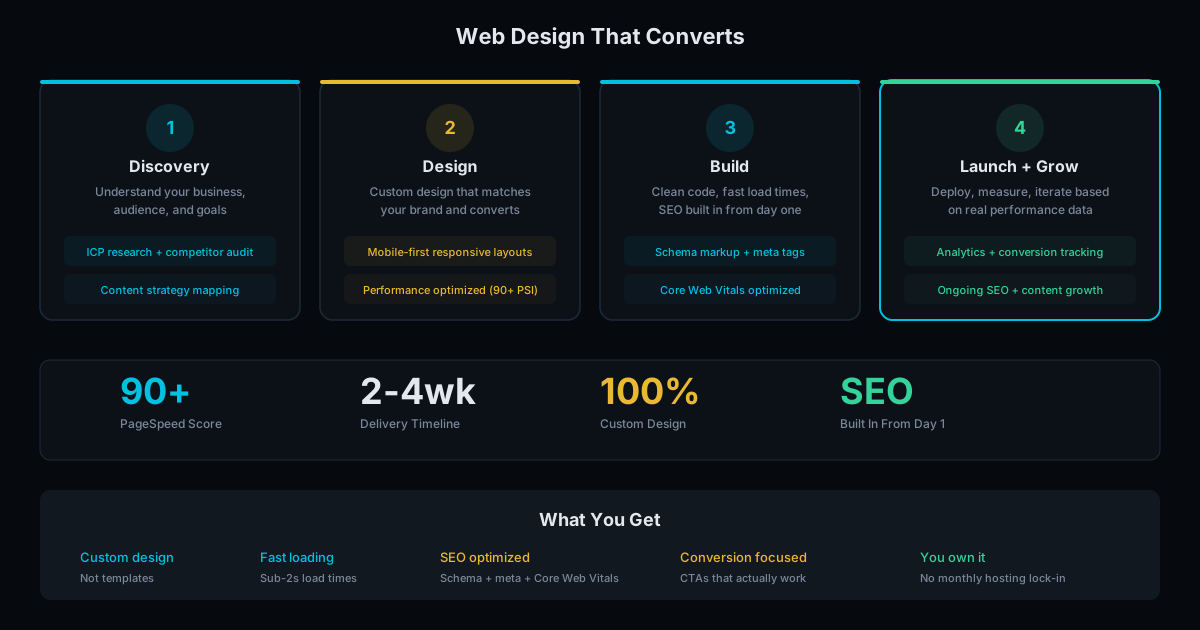
We build websites for professional services firms that convert visitors into consultation requests. 90+ PageSpeed, full SEO markup, and conversion-optimized design.
Professional services sites start at $3,000. Check our pricing page for full details. Get a quote or audit your current site to see what is costing you leads.
Frequently Asked Questions
How many case studies should I have?
Minimum 3 to establish a pattern. Ideally one for each industry or service area you target. Quality matters more than quantity: one detailed case study with specific metrics outperforms five vague testimonials.
Should I show pricing on a professional services website?
Ranges or 'starting at' prices help qualify leads. 'Engagements start at $10,000' filters out prospects who cannot afford your services and reassures prospects who can. If your pricing is custom, at least describe the factors that affect pricing.
What is the most important page for conversions?
The service page specific to the visitor's need. If you offer 5 services, each service page is a landing page for that audience. Make each one specific, results-oriented, and end with a clear CTA. The homepage drives traffic to service pages; service pages drive conversions.
Ready to Fill Your Next Event?
We build the page, set up the pixels, and run the ads. You run the event.