
Best Website Audit Tools and Services in 2026
By Rome Thorndike
What a Good Website Audit Should Tell You
A website audit should answer three questions: How fast is my site? How does Google see it? What is costing me traffic and conversions?
Most audit tools answer the first question and stop there. They show you a PageSpeed score, a list of technical issues, and a wall of recommendations sorted by impact. That is useful for developers who know what to do with the data. It is less useful for business owners who need to know what to fix first and whether the fix is worth the investment.
The best audit tools and services go further. They connect performance data to business outcomes: this slow load time is causing this bounce rate, which is costing you this many leads per month. That is the difference between a diagnostic report and an actionable plan.
We ranked these five options on how actionable their output is, what they cover (speed, SEO, accessibility, security), ease of use, and cost.
Audit Tools and Services Compared
| Rank | Tool / Service | Type | Covers | Cost | Actionability |
|---|---|---|---|---|---|
| #1 | SharpPages Free Audit | Done-for-you service | Speed, SEO, architecture, cost | Free | High (specific fixes + pricing) |
| #2 | PageSpeed Insights | Free tool (Google) | Speed, Core Web Vitals | Free | Medium (technical recommendations) |
| #3 | GTmetrix | Freemium tool | Speed, waterfall, monitoring | $0-42/mo | Medium (detailed diagnostics) |
| #4 | Screaming Frog | Desktop crawler | Technical SEO, site structure | Free (500 URLs) / $259/yr | High (for technical SEOs) |
| #5 | Ahrefs Site Audit | SaaS platform | SEO, backlinks, content | $99-999/mo | High (for SEO professionals) |
These tools solve different problems. SharpPages and PageSpeed Insights focus on performance. Screaming Frog and Ahrefs focus on SEO. GTmetrix bridges both. The right choice depends on what you need to know and what you plan to do with the information.
#1 SharpPages Free Audit: Performance Analysis with a Fix Plan
The SharpPages free audit is not a tool. It is a service. You submit your URL, and we run a comprehensive analysis of your site's performance, architecture, SEO setup, and hosting costs. You get back a report that includes:
- Mobile and desktop PageSpeed scores with specific bottleneck identification
- Core Web Vitals breakdown (LCP, CLS, INP/TBT) with causes
- Platform analysis: what is your site built on and what overhead does that platform add?
- Hosting cost analysis: what are you paying now vs what you could be paying?
- Specific recommendations ranked by impact, with estimated score improvements
- A fixed-price quote if you want us to implement the fixes
The audit is free with no obligation. We do not gate it behind an email signup or require a call. Submit the URL, get the report.
Why is this #1? Because the output is actionable for business owners, not just developers. Instead of "eliminate render-blocking resources" (which tells you nothing about cost or effort), you get "your WordPress theme loads 340KB of unused CSS; rebuilding as static HTML eliminates this entirely and moves your score from 62 to 94; the rebuild costs $2,500."
Best for: Any business owner who wants to understand what their website's performance is costing them and what it would take to fix it.
#2 PageSpeed Insights: Google's Own Benchmark
PageSpeed Insights (PSI) is Google's free performance testing tool. It runs a Lighthouse audit on any URL and returns both lab data (simulated mobile/desktop) and field data (real user metrics from Chrome User Experience Report).
PSI is the industry standard benchmark. When someone says their site "scores 90 on PageSpeed," they are referring to this tool. It measures the Core Web Vitals that Google uses as ranking signals: Largest Contentful Paint, Cumulative Layout Shift, and Interaction to Next Paint.
The output includes specific recommendations with estimated savings (e.g., "serve images in next-gen formats: estimated savings 1.2s"). The recommendations are technically accurate but assume developer knowledge to implement. A non-technical user will not know how to "reduce JavaScript execution time" or "preload key requests."
PSI tests one URL at a time. It does not crawl your site, analyze your SEO, or check for broken links. It is a speed diagnostic, not a comprehensive audit. Use it as a starting point, not the complete picture.
Cost: Free. Best for: Quick performance checks on specific pages. Run your homepage and your slowest page to understand your site's performance range.
#3 GTmetrix: Detailed Speed Diagnostics
GTmetrix combines Lighthouse performance data with a detailed waterfall chart showing every resource your page loads, in order, with timing for each. The waterfall is what sets GTmetrix apart: it lets you see exactly what is loading, when, and how long each resource takes.
The free tier tests one URL from a single location (Vancouver, Canada). Paid plans add test locations worldwide, monitoring (scheduled daily/weekly tests with alerts), API access, and the ability to test from mobile devices. The Growth plan ($42/month) includes 20 monitored URLs and hourly checks.
GTmetrix is most useful for diagnosing specific performance problems. If PageSpeed Insights says "reduce server response time," GTmetrix's waterfall shows you that the server takes 2.3 seconds to return the HTML document, which tells you the problem is server-side (hosting quality, database queries, or PHP execution), not client-side.
Like PSI, GTmetrix diagnoses but does not fix. The output is a report, not a solution. It is a powerful tool for developers and agencies. For business owners without technical knowledge, the data can be overwhelming without context on what matters and what to do about it.
Cost: Free (limited) / $6-42 per month. Best for: Developers and agencies who need detailed performance diagnostics and ongoing monitoring.
#4-5: Screaming Frog and Ahrefs Site Audit
#4 Screaming Frog is a desktop SEO crawler. It crawls your entire site and reports on technical SEO issues: broken links, duplicate titles, missing meta descriptions, redirect chains, thin content, hreflang errors, and more. The free version crawls up to 500 URLs. The paid version ($259/year) removes the limit and adds JavaScript rendering, custom extraction, and API integrations.
Screaming Frog does not measure page speed. It is purely a technical SEO tool. But the issues it finds (broken links, duplicate content, missing meta tags) directly affect search rankings. If your site has 50 pages with duplicate title tags or 200 broken internal links, Screaming Frog will find them. It is a standard tool in every SEO professional's stack.
#5 Ahrefs Site Audit is part of the Ahrefs SEO platform. It crawls your site and reports on 100+ technical SEO issues, grouped by category and severity. The audit integrates with Ahrefs' backlink data, keyword rankings, and competitor analysis, giving you a complete SEO picture in one dashboard.
Ahrefs is the most comprehensive option on this list, but it is also the most expensive ($99-999/month depending on plan). The Site Audit feature alone does not justify the subscription. You are paying for the full platform: backlink analysis, keyword research, rank tracking, and content gap analysis. If you already use Ahrefs for SEO, the site audit is a valuable addition. If you just need an audit, it is overkill.
Screaming Frog best for: Technical SEO audits at scale. Essential for sites with 100+ pages. Ahrefs best for: Teams already invested in the Ahrefs ecosystem who want auditing alongside full SEO analytics.
What Does a Website Audit Include? The 7 Categories
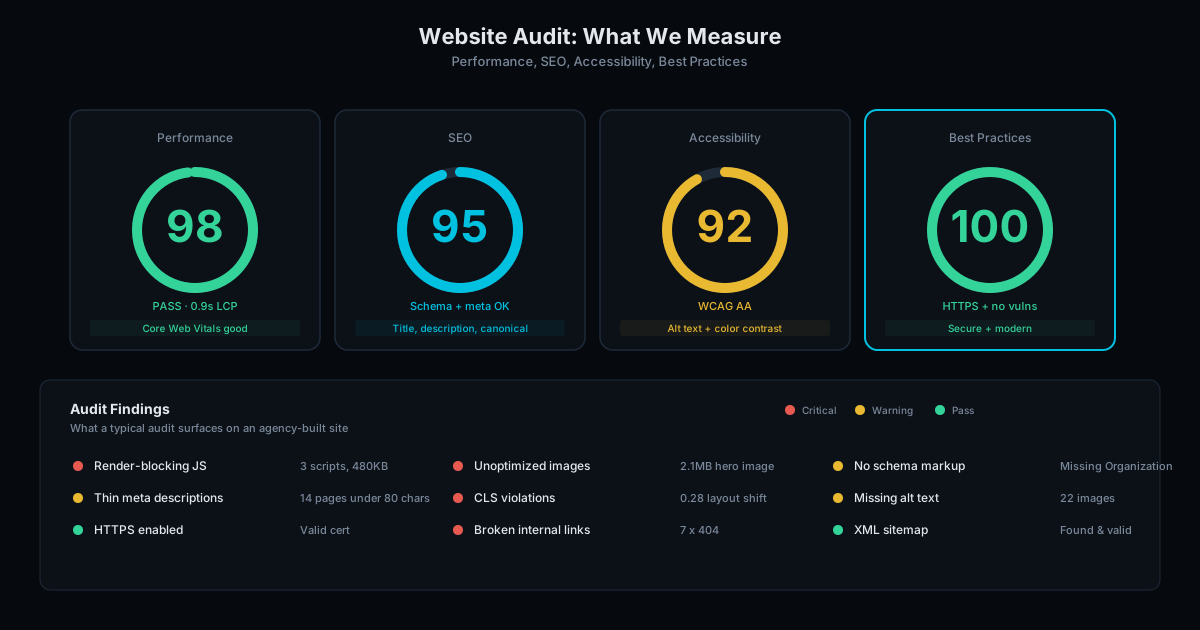
A complete website audit covers seven categories. Lightweight tools touch one or two. Full-service audits cover all seven and explain what each finding costs you in traffic, conversions, or risk.
- Performance and Core Web Vitals. Mobile and desktop PageSpeed scores, LCP, CLS, INP, TBT, TTFB, total page weight, and the specific bottlenecks behind each metric. This is the speed half of an audit.
- Technical SEO. Crawlability (robots.txt, sitemap.xml, internal linking), indexability (canonical tags, hreflang, noindex pings), redirect chains, broken links, duplicate titles and meta descriptions, thin content, orphan pages.
- On-page SEO. Title tags, meta descriptions, H1 usage, heading hierarchy, image alt text, schema markup coverage, keyword targeting, search-intent match per page.
- Accessibility. WCAG 2.1 AA conformance: color contrast, keyboard navigation, screen-reader labels, form labels, focus states, ARIA roles. Required by ADA in the US and the European Accessibility Act (June 2025).
- Security and trust. HTTPS, HSTS, mixed content, outdated software (WordPress core or plugins past the latest version), missing security headers, exposed admin paths, leaked staging URLs in search.
- Analytics and tracking integrity. GA4 install, event mapping, conversion tracking, Meta Pixel, server-side tagging, UTM hygiene. A site that ranks well but cannot prove conversions is a site that loses budget arguments.
- Hosting cost and architecture. What the site runs on, what it costs per month, whether the platform itself is the speed ceiling. Most audits ignore this and recommend tweaks that the underlying CMS will keep undoing.
If a free audit tool only shows category 1, you are looking at one slice of a larger picture. The SharpPages free audit covers all seven and ranks the findings by revenue impact, not by Lighthouse severity score.
Audit Services Meaning: What You Are Actually Buying
"Audit services" is a category that bundles three distinct deliverables. Confusing them is how people pay $2,000 and get a PDF they cannot act on.
- Automated audit report. A tool runs against your URL and outputs a PDF. Cost: $0 to $99. Value: a starting list of findings. Limitation: no judgment about what matters for your business.
- Consultative audit. A human reviews the tool output, validates findings against your goals, and writes a prioritized remediation plan. Cost: $1,500 to $7,500 from a typical agency. Value: a roadmap and effort estimates.
- Audit plus implementation. The audit is free or credited toward the build. The provider fixes the findings, not just reports them. Cost: the build itself (SharpPages redesigns start at $4,500). Value: actual score improvement, not a document.
The free SharpPages audit sits between option 1 and option 3. The findings are human-reviewed against your business context, the report is delivered in 48 hours, and you can stop there or hire us to implement. No subscription, no upsell to a $3,000 "strategy session." Compare against our PageSpeed optimization services guide if speed is the only category you care about.
Website Analysis Services vs Audit Tools: The Real Difference
"Website analysis services" is the term most consultancies use when they sell strategy reviews. "Website audit tools" usually refers to software. The deliverables differ in three ways:
| Dimension | Audit Tool (software) | Analysis Service (human) |
|---|---|---|
| Output | Standardized scoring report | Custom diagnosis tied to your KPIs |
| Turnaround | Instant to 30 minutes | 3 to 14 business days |
| Coverage | What the tool measures | What the analyst chooses to look at |
| Price | $0 to $999 per month | $1,500 to $25,000 per engagement |
| Quality variance | Low (deterministic) | High (depends on the analyst) |
| Best for | Monitoring known KPIs | Diagnosing a specific business problem |
If you already know what to optimize (mobile PageSpeed, INP, technical SEO crawl errors), an audit tool is the cheaper and faster answer. If you do not know why traffic is declining or why conversions stalled, a human analyst saves money by skipping the wrong fixes.
Two practical examples. A 24-page B2B service site with stable traffic and 1.2% conversion: software audit, run quarterly, fix the top three findings. A 300-page agency site that lost 38% of organic traffic after a redesign: human analysis service, because the cause could be 12 different things and a generic report will not narrow it down.
Website Audit Cost: What You Should Pay in 2026
Real 2026 price ranges for website audits, observed across US and EU providers:
- Free. PageSpeed Insights, Lighthouse in Chrome DevTools, SharpPages free audit, Screaming Frog (under 500 URLs), GTmetrix free tier.
- $50 to $300 per month. GTmetrix Pro ($6 to $42), Sitebulb ($35), SEMrush Site Audit module (bundled at $139), Lumar Lite. Good for ongoing monitoring of a single property.
- $99 to $999 per month. Ahrefs ($129 starter, $499 advanced), SEMrush Guru ($249), Conductor, BrightEdge. SEO platform subscriptions where the audit is one of many features.
- $1,500 to $5,000 one-time. Independent consultant or small agency engagement. Custom PDF, walkthrough call, 60 to 90 day prioritized roadmap.
- $7,500 to $25,000 one-time. Mid-tier digital agency or specialist firm. Multi-discipline team (SEO, dev, design, accessibility), executive presentation, often bundled with a retainer.
- $25,000+. Enterprise engagements (Deloitte Digital, Accenture Song, large SEO firms). Multi-month diagnostic with stakeholder interviews and competitive benchmarks.
For a site under 100 pages, anything above $7,500 is almost certainly overpaying. The diminishing returns are sharp. The SharpPages model gives the audit away for free and prices the fix work transparently: WordPress migrations from $2,500, full redesigns at $3,000 to $6,000. See full pricing.
Accessibility and Security Audits Are Separate (and Often Required)
A standard performance and SEO audit will not catch ADA accessibility violations or security misconfigurations. These need dedicated tooling.
Website accessibility audit services. WCAG 2.1 AA is the de facto US standard, referenced in DOJ guidance on ADA Title III. Free tools that scan for common issues: WAVE (WebAIM), axe DevTools, Lighthouse Accessibility section. Paid services for full conformance reports: Deque ($5,000+), AccessibilityWorks ($2,500 to $10,000), Level Access. Manual screen-reader testing with NVDA or JAWS is the only way to catch nuances tools miss.
Website security audit services. Free baseline: Mozilla Observatory, Security Headers (securityheaders.com), Qualys SSL Labs. Paid penetration testing from firms like NCC Group, Bishop Fox, or smaller boutiques runs $5,000 to $50,000 depending on scope. For a marketing site (no user accounts, no payments), a $50/month Wordfence or Sucuri subscription plus quarterly header scans covers the realistic threat model.
If you fall under SOC 2, HIPAA, or PCI DSS, you need a formal penetration test annually. A marketing-site audit will not satisfy that requirement.
For most SharpPages clients, accessibility and security audits piggyback on the redesign. Static HTML eliminates the entire WordPress plugin attack surface, and we ship WCAG 2.1 AA conformance as a default. See our WordPress alternatives guide for the platform tradeoff.
What a Real Website Audit Report Looks Like
A useful audit report has six parts. If a vendor sends you something missing more than two of these, ask for them before paying.
- Executive summary, 1 page. The three biggest findings, the estimated revenue or risk impact, the recommended next move. A CEO can decide from this page alone.
- Performance baseline. Mobile and desktop PageSpeed scores per template, Core Web Vitals field data from Chrome User Experience Report (28-day window), a comparison against the top 3 organic competitors.
- Findings table. Each finding rated by severity (critical, major, minor), effort (hours), and estimated impact (score delta or traffic lift). Sorted by impact divided by effort.
- Evidence appendix. Screenshots of PageSpeed results, Screaming Frog exports for crawl issues, WAVE output for accessibility, securityheaders.com grade. The proof, not just the claim.
- Remediation roadmap. A 30, 60, 90 day plan with the top findings grouped by owner (developer, content team, hosting). Specific enough that you can hand it to a contractor.
- Cost-to-fix estimate. Two columns: in-house effort (hours times your blended rate) and outsourced fixed price. Both should fit on one page.
Generic 80-page PDFs that read like the tool output verbatim are a red flag. The work was the analysis, not the document. If the document is the bulk of the deliverable, you are paying for formatting.
Which Audit Approach Is Right for You?
Match the tool to the question you are trying to answer:
- "Is my site fast enough?" Start with SharpPages free audit or PageSpeed Insights. Get a score, understand the bottlenecks, and see what fixing them would cost.
- "Why is my specific page slow?" Use GTmetrix for the waterfall breakdown. It shows you exactly which resources are causing delays.
- "Does my site have technical SEO problems?" Run Screaming Frog. It will find broken links, duplicate content, missing tags, and redirect issues across your entire site.
- "How does my site compare to competitors in search?" Ahrefs gives you the full picture: your rankings, their rankings, backlink gaps, and content opportunities.
For most small business owners, the SharpPages free audit is the best starting point because it translates technical problems into business impact and specific next steps. You do not need to understand what "Total Blocking Time" means. You need to know that your site loads in 4 seconds, visitors are bouncing, and fixing it costs X dollars. That is what our audit delivers.
Already know your site is slow? Skip the audit and go straight to pricing or our redesign process. Every SharpPages build includes a pre-launch audit validating 90+ mobile PageSpeed before your site goes live.
Frequently Asked Questions
What does a website audit include?
A complete website audit covers seven categories: performance and Core Web Vitals, technical SEO (crawl, index, redirects), on-page SEO (titles, headings, schema), accessibility (WCAG 2.1 AA), security (HTTPS, headers, software versions), analytics integrity (GA4, conversion tracking), and hosting cost or architecture review. Speed-only tools cover one category. Full audits cover all seven and prioritize findings by business impact.
What is the meaning of audit services for a website?
Website audit services is an umbrella term for three different deliverables: a software-generated report (usually free to $99), a human-written diagnostic and roadmap ($1,500 to $7,500), or a free audit bundled with implementation work (cost rolls into the fix project). Knowing which one you are buying prevents paying agency prices for a PDF you could have generated yourself.
What is the difference between website analysis services and audit tools?
Audit tools are software (PageSpeed Insights, Screaming Frog, Ahrefs) that produce a standardized report in minutes for $0 to $999 per month. Analysis services are human-led engagements that diagnose a specific business problem in 3 to 14 days for $1,500 to $25,000. Use tools to monitor known KPIs and services to figure out why an unknown problem is happening.
How much does a website audit cost?
Free options exist (PageSpeed Insights, the SharpPages free audit, Screaming Frog free tier). Paid subscription tools run $50 to $999 per month. One-time consultant audits range from $1,500 to $7,500 for small to mid-size sites. Enterprise engagements run $25,000 and up. For a site under 100 pages, paying more than $7,500 rarely produces commensurate return.
What is a good website audit report example?
A useful report has six parts: a one-page executive summary, a performance baseline against competitors, a findings table sorted by impact over effort, an evidence appendix with screenshots and exports, a 30-60-90 day remediation roadmap, and a cost-to-fix estimate with in-house and outsourced columns. Reports that pad with 80 pages of tool output without analysis are a red flag.
Are there free website audit sites I can trust?
Yes. PageSpeed Insights from Google is the industry benchmark for speed. WAVE from WebAIM covers accessibility. Mozilla Observatory and securityheaders.com cover security headers. The SharpPages free audit combines speed, SEO, accessibility, and hosting cost analysis in one report with no signup gate. None of these require payment for the baseline diagnosis.
How often should I audit my website?
Run a performance audit quarterly and after any major content or design changes. For technical SEO, a monthly crawl with Screaming Frog catches issues before they affect rankings. SharpPages sites built on static HTML do not degrade over time since there are no plugins to update or databases to slow down, so audits are less critical post-launch.
Is the SharpPages audit really free?
Yes. Submit your URL and get a full performance, architecture, and cost analysis with no obligation. We do not gate it behind a call or email sequence. The audit includes specific recommendations and a fixed-price quote if you want us to implement the fixes.
What is a good mobile PageSpeed score?
Google considers 90+ a good score. Scores between 50-89 need improvement. Below 50 is poor. Most WordPress and Webflow sites score 45-75 on mobile. SharpPages builds score 90-98. If your site is below 80, you are likely losing organic traffic to faster competitors in your space.
Ready to Fill Your Next Event?
We build the page, set up the pixels, and run the ads. You run the event.

Rome Thorndike
Rome Thorndike is the Founder & CEO of SharpPages, which builds event websites around a clear commercial goal: turning audience interest into registrations. He previously led marketing and revenue at Firmograph and held enterprise sales roles at Microsoft and Salesforce.
Connect on LinkedIn