
B2B SaaS Website Best Practices: Speed, SEO, and Conversion
By Rome Thorndike
Speed as a Competitive Advantage
Most B2B SaaS websites are built on React, Next.js, or Webflow. They look polished but load slowly on mobile: 3 to 5 seconds for the initial render. In a market where prospects evaluate 3-5 tools before deciding, the faster site gets more of the prospect's attention.
A SaaS marketing site does not need a JavaScript framework. It is a collection of static pages: homepage, features, pricing, case studies, blog. These pages change weekly or monthly, not in real-time. A static site serves them 3-5x faster than a React app.
The product itself may be a complex web app. The marketing site that sells the product should be as fast as possible. Separate concerns: fast static marketing site, complex dynamic product app.
Google's research on Core Web Vitals shows that sites meeting all three metrics (LCP under 2.5s, CLS under 0.1, INP under 200ms) see 24% fewer page abandonment rates. For a SaaS site running $50K/month in paid traffic, that improvement translates to thousands in saved ad spend. Read our breakdown of Core Web Vitals and what each metric means.
Messaging That Converts
Homepage headline: Lead with the outcome, not the product. "Close 30% more deals with AI-powered pipeline scoring" beats "AI Sales Intelligence Platform." The visitor should understand what they get, not what you built.
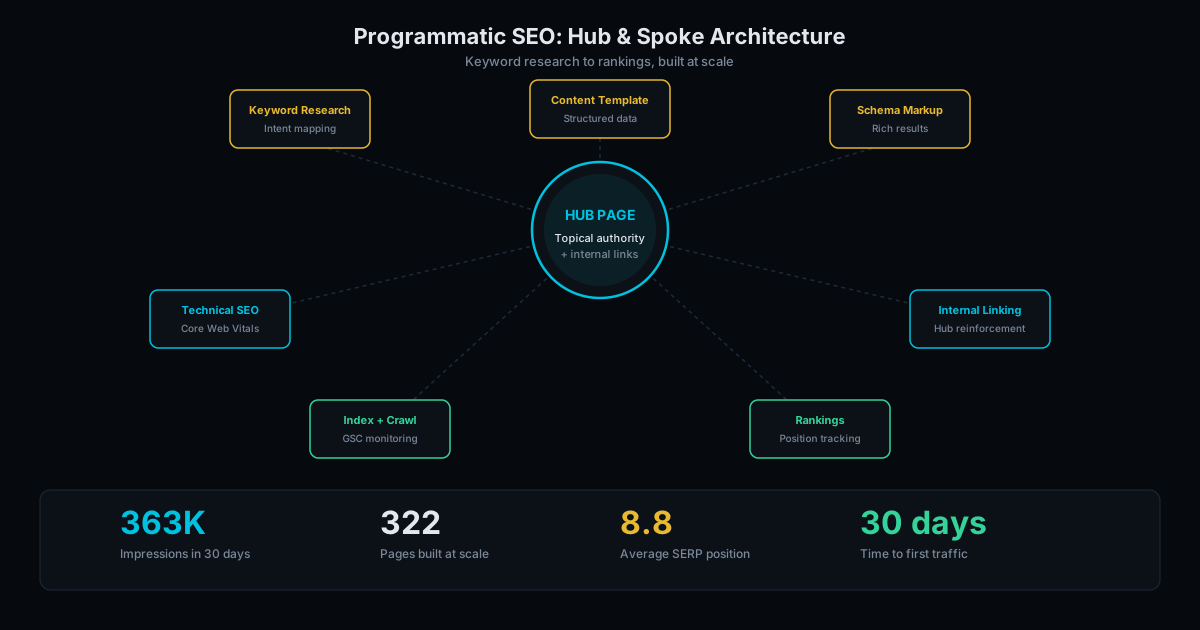
Feature pages: One page per major feature or use case. Each page targets a specific keyword ("[feature category] software") and speaks to a specific buyer pain. Link feature pages in a hub-and-spoke structure from a main features page.
Pricing page: SaaS visitors check pricing early. Transparent pricing qualifies leads and reduces sales cycle time. If pricing is variable, show "starting at" tiers or a "Talk to Sales" CTA with clear context on what drives pricing. Companies with public pricing pages see 30% shorter sales cycles compared to "contact us for pricing" approaches.
Social proof: Customer logos, case studies with metrics, G2/Capterra ratings, and testimonials. Place them on each conversion-adjacent page (pricing, demo request, sign-up). A G2 badge showing "4.7 out of 5 stars from 200+ reviews" next to a demo CTA consistently outperforms a CTA without social proof.
The Demo Request Funnel
Most SaaS sites bury the demo request behind too many steps. The best-converting funnels keep it simple:
- Primary CTA on each page: "Get a Demo" or "Start Free Trial" visible without scrolling. Drift, Intercom, and Gong all follow this pattern.
- Short form: Name, email, company. That is it. Each additional field reduces completion by 5-10%. Qualify leads after they submit, not before.
- Instant confirmation: Show a Calendly embed or auto-redirect to booking after submission. Eliminating the "we will get back to you" lag reduces drop-off by 30-40%.
For product-led growth, offer both paths: a self-serve free trial for hands-on buyers and a demo request for enterprise buyers who want a guided walkthrough. Slack, Notion, and Figma all run dual funnels.
Track conversion rates by page. Your pricing page should convert at 3-8%. If it is under 2%, the pricing presentation or CTA placement needs work. Your homepage should convert at 1-3% for demo requests. A lead magnet on blog pages captures visitors who are not ready for a demo but want to stay in your orbit.
SEO for SaaS
SaaS SEO targets three search categories:
- Category searches: "[Category] software," "best [category] tools." Competitive but high-intent. Your homepage and features pages target these.
- Comparison searches: "[Your Product] vs [Competitor]," "[Competitor] alternatives." Programmatic SEO can generate these at scale if you have many competitors.
- Problem searches: "How to [solve problem your product addresses]." Blog content and guides target these top-of-funnel queries and build topical authority.
Integration pages ("[Your Product] + [Integration] integration") are high-value programmatic SEO targets for SaaS. Zapier built 25,000+ of these pages. Even at smaller scale, 50-100 integration pages capture long-tail traffic that converts at 2-5x the rate of blog content because the searcher already uses a complementary tool.
Implement structured data on your product pages. SoftwareApplication schema, FAQ schema on comparison pages, and Organization schema sitewide help Google display rich results for your brand queries. Sites with structured data earn 20-30% higher click-through rates from organic search results.
Content velocity matters for SaaS SEO. Publish 2-4 blog posts per month targeting problem-awareness queries. After 6 months, you will have 15-25 indexed pages building topical authority. After 12 months, compound growth kicks in as older posts gain backlinks and authority. HubSpot attributes 75% of their blog traffic to posts published more than 6 months ago. The content you publish today pays dividends for years.
Do not overlook internal linking. Each blog post should link to 2-3 product or feature pages. Each feature page should link to relevant blog content. This creates a web of topical relevance that helps Google understand what your product does and who it serves. For a deeper look at this approach, read our guide on what happens to SEO during a redesign.
Build Your SaaS Marketing Site
We build marketing sites for B2B SaaS companies. Static architecture for 90+ PageSpeed. SEO infrastructure for organic growth. Conversion-optimized messaging and layout.
SaaS marketing sites start at $3,000. Programmatic SEO for comparisons and integrations: $3,000 to $10,000. See our pricing page for details or get in touch.
Frequently Asked Questions
Should my SaaS marketing site be separate from the product?
Yes. The marketing site sells the product. The product app serves users. Different goals, different architectures, different optimization targets. A static marketing site loads in under 1 second. A React product app loads in 2-4 seconds. Keep them separate.
Do I need a blog for SaaS SEO?
Yes. Blog content targets problem-awareness searches that your product and feature pages cannot. A buyer searching 'how to reduce churn' is not ready for your pricing page. A blog post answering that question builds awareness and captures the lead earlier in the journey.
How important is PageSpeed for SaaS sites?
SaaS buyers evaluate multiple tools quickly. A slow site loses attention. SaaS content competes with well-funded competitors, and PageSpeed is a differentiator when content quality is comparable. 90+ PageSpeed signals professionalism and technical competence to a technical buyer.
Ready to Fill Your Next Event?
We build the page, set up the pixels, and run the ads. You run the event.